


When most people hear the word diabetes, they immediately think of one of two conditions: Type 1 diabetes or Type 2 diabetes. But did you know there’s another form of diabetes that often flies under the radar?
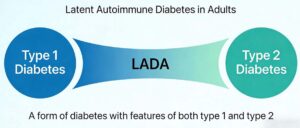
It’s called Type 1.5 diabetes, or Latent Autoimmune Diabetes in Adults (LADA). Although it isn’t an official medical classification, the term “Type 1.5” is widely used because this condition shares characteristics of both Type 1 and Type 2 diabetes.
Unfortunately, many people with LADA are initially diagnosed with Type 2 diabetes, delaying the treatment they really need.
Let’s take a closer look at what makes this type of diabetes unique.
First, let’s talk about insulin
To understand any type of diabetes, you first need to understand insulin.
Insulin is a hormone made by specialized beta cells in the pancreas. Every time you eat carbohydrates—whether it’s an apple, a bowl of oatmeal, a baked potato, or a slice of birthday cake—your digestive system breaks those carbohydrates down into glucose, the body’s primary source of fuel.
That glucose enters your bloodstream, but it can’t get into your cells by itself.
I like to think of insulin as a key.
Your cells are like houses with locked doors. Insulin unlocks those doors, allowing glucose to move from your bloodstream into your cells, where it can be burned for energy.
Without insulin, glucose remains trapped in the bloodstream while your cells are literally starving for fuel.
What is insulin resistance?
In Type 2 diabetes, the problem usually isn’t a lack of insulin—at least not initially.
Instead, the body’s cells gradually stop responding to insulin as effectively. Imagine that the lock on the door becomes rusty. The key still exists, but it doesn’t work nearly as well.
Your pancreas responds by producing more and more insulin to compensate.
This is called insulin resistance.
For years, the pancreas may be able to keep up with the increased demand. But eventually, it becomes exhausted, blood sugar begins to rise, and prediabetes or Type 2 diabetes develops.
So what is Type 1.5 diabetes?
Here’s where things get interesting.
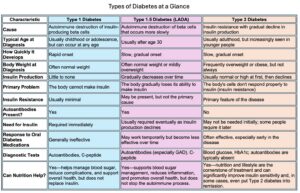
Unlike Type 2 diabetes, Type 1.5 diabetes is an autoimmune disease.
The immune system mistakenly attacks the beta cells of the pancreas—the very cells responsible for making insulin.
This is the same underlying process that occurs in Type 1 diabetes.
However, unlike classic Type 1 diabetes, which often develops rapidly during childhood or adolescence, LADA develops much more slowly, usually during adulthood.
At first, the pancreas still produces enough insulin to keep blood sugar reasonably controlled.
Over time, however, the autoimmune attack gradually destroys more beta cells until insulin production becomes insufficient.
Eventually, most people with LADA require insulin therapy.
Why is it called Type 1.5?
The nickname “Type 1.5” comes from the fact that LADA shares characteristics of both major types of diabetes.
Like Type 1 diabetes, it is autoimmune.
Like Type 2 diabetes, it usually develops during adulthood and progresses gradually.
Because the onset is slow, many adults are told they have Type 2 diabetes when they actually have LADA.
Signs that someone may have LADA
There is no single symptom that screams “Type 1.5 diabetes,” but several clues can point healthcare providers in the right direction.
People with LADA often (Rajkumar et al., 2023):
- Are diagnosed after age 30.
- May not be overweight.
- Have a personal or family history of autoimmune diseases such as Hashimoto’s thyroiditis, celiac disease, rheumatoid arthritis, lupus, or vitiligo.
- Initially respond to lifestyle changes or oral diabetes medications but find that blood sugar gradually becomes harder to control.
- Eventually require insulin much sooner than expected for someone with Type 2 diabetes.
If diabetes simply doesn’t fit the typical Type 2 picture, it may be worth discussing additional testing with your healthcare provider.
How is LADA diagnosed?
Two laboratory tests are particularly helpful.
The first is autoantibody testing, especially the GAD (glutamic acid decarboxylase) antibody test. The presence of these antibodies indicates that the immune system is attacking the pancreas.
The second is a C-peptide test, which measures how much insulin the pancreas is still producing.
Together, these tests help distinguish LADA from Type 2 diabetes (Rajkumar et al., 2023).
What Causes Type 1.5 Diabetes?
The truth is, we don’t yet know exactly what causes LADA. Like many autoimmune diseases, it’s a complex condition, and researchers are still working to understand why one person develops it while another does not.
What we do know is that it’s likely the result of a combination of genetics and environmental influences.
Some people are born with genes that increase their susceptibility to autoimmune diseases. One group of genes, known as human leukocyte antigen (HLA) genes, helps regulate the immune system. Certain HLA gene variants are associated with a higher risk of developing autoimmune conditions, including both Type 1 diabetes and LADA (Rajkumar & Levine, 2024). However, having these genes does not guarantee that someone will develop the disease—it simply increases their susceptibility.
Researchers also believe that environmental and lifestyle factors may act as triggers in people who are genetically predisposed. Studies have found associations between LADA and factors such as excess body weight, increased abdominal fat, low birth weight, smoking, and higher consumption of sugar-sweetened beverages. Some research has also observed an association with drinking two or more cups of coffee per day, although this finding is less clear and doesn’t necessarily mean coffee causes LADA (Rajkumar & Levine, 2024). Associations like these help researchers generate new questions, but they don’t prove cause and effect.
From a functional nutrition perspective, I like to think of genetics as loading the gun, while environment and lifestyle may pull the trigger. Our genes may create the potential for disease, but they don’t always determine our destiny.
Functional medicine practitioners also recognize that many autoimmune conditions appear to share common underlying imbalances. While the research is still evolving, factors such as chronic physiological stress, environmental toxin exposure, disruptions in the gut microbiome, increased intestinal permeability (often referred to as “leaky gut”), hormonal imbalances, and certain infections are thought to influence immune function in susceptible individuals (Rajkumar & Levine, 2024).
Although we can’t change our genes, we can influence many of the factors that affect how our genes are expressed. That’s one of the reasons I’m so passionate about nutrition and lifestyle medicine. Eating a whole-food, nutrient-dense diet, supporting gut health, getting adequate sleep, managing stress, exercising regularly, and minimizing unnecessary exposure to environmental toxins may all help support a healthy immune system and improve overall health—even if they can’t prevent or cure an autoimmune disease.
The bottom line
Type 1.5 diabetes, or Latent Autoimmune Diabetes in Adults (LADA), is more common than many people realize. Because it develops slowly and often appears in adulthood, it is frequently mistaken for Type 2 diabetes.
If you or someone you love has diabetes that doesn’t seem to follow the typical Type 2 pattern—especially if blood sugar continues to worsen despite healthy eating, exercise, and medication—it may be worth asking a healthcare provider whether testing for LADA is appropriate.
The earlier the correct diagnosis is made, the sooner treatment can be tailored to preserve health and improve long-term outcomes.
As always, remember that knowledge is empowering. Understanding what’s happening inside your body allows you to make informed decisions and partner with your healthcare team to achieve the best possible health.
References
Rajkumar, V., & Levine, S.N. (2024). Latent autoimmune diabetes. In StatPearls [Internet]. StatPearls Publishing. Retrieved July 20, 2026, from https://www.ncbi.nlm.nih.gov/books/NBK557897/
Ravikumar, V., Ahmed, A., & Anjankar, A. (2023). A review on latent autoimmune diabetes in adults. Cureus, 15(10), e47915. https://doi.org/10.7759/cureus.47915
