

If you’ve followed me for a while, you know I’m passionate about helping people eat more leafy greens. I truly believe they deserve a starring role on your plate.
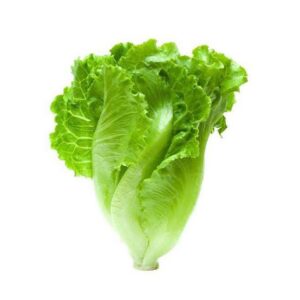 One question I hear fairly often is whether romaine lettuce is “safe” if you can’t find it organic. After all, we hear so much about the Environmental Working Group’s (EWG) Dirty Dozen list that it can leave people wondering whether they should skip certain fruits and vegetables altogether if they aren’t organic.
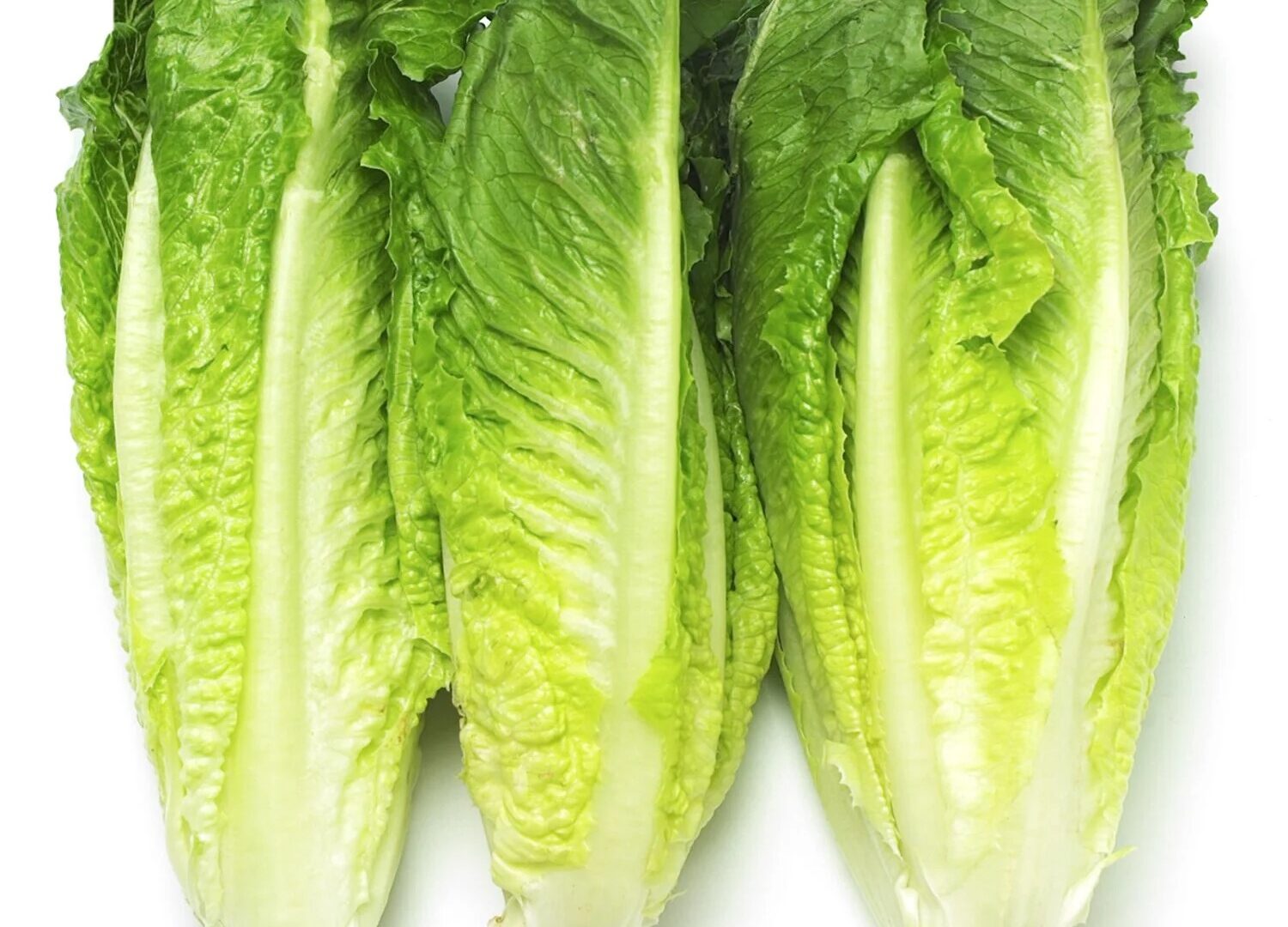
I have a confession to make: Romaine, also called Cos, is one of my favorite lettuces. I eat it nearly every day. It’s crunchy, refreshing, versatile, and an easy way to add more greens to meals. Whether I’m making a big salad, wrapping up tuna or chicken salad, or adding it to a smoothie, sandwich or tacos, romaine is almost always in my refrigerator.
Recently, my husband and I relocated to a small town in northern Arizona. While I absolutely love living here, one challenge has been finding quality organic romaine. It isn’t consistently available, and when it is the quality is not great, so I’ve been buying conventionally grown romaine while I learn to grow it myself in my organic garden.
I’ll admit, I was a little uneasy at first.
Then I looked at the data.
Romaine Isn’t on EWG’s 2026 Dirty Dozen list
Many people are surprised to learn that romaine lettuce is not on the Dirty Dozen list. In fact, EWG doesn’t evaluate romaine separately. Instead, different lettuce varieties are grouped together under the category of “lettuce.” In EWG’s 2026 Shopper’s Guide to Pesticides in Produce, lettuce ranks #33 out of 47 produce items analyzed, placing it in the middle of the list—neither among the highest pesticide residues (Dirty Dozen) nor the lowest (Clean Fifteen) (Environmental Working Group, 2026).
That was reassuring news for me. Romaine is considered a moderate-risk choice for pesticide residues. It generally has lower pesticide residues than spinach, kale, and mustard greens, which consistently rank near the top of the Dirty Dozen list.
It reminded me that nutrition isn’t about perfection. It’s about making the best choices available to us while continuing to eat plenty of nutrient-rich foods.
Romaine Is a Nutritional Powerhouse
Romaine lettuce may seem like a simple leafy green vegetable, but it’s one of the most nutrient-dense foods you can eat for very few calories. One cup of shredded romaine contains only about 8 calories, yet it delivers an impressive variety of vitamins, minerals, fiber, and protective plant compounds.
Some of its standout nutrients include (Shi et al., 2022):
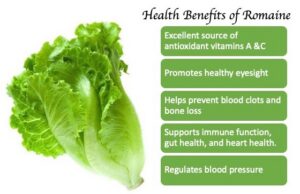
Vitamin K: Essential for healthy blood clotting and maintaining strong bones. One cup of romaine provides more than half of the recommended daily intake.
Vitamin A (as beta-carotene): Supports healthy vision, immune function, and the integrity of the skin and digestive tract.
Folate: Important for DNA synthesis and cell division, making it especially valuable during pregnancy.
Vitamin C: Supports immune health, collagen production, and functions as an antioxidant.
Potassium: Helps regulate blood pressure, nerve transmission, and muscle contraction.
Small amounts of calcium, magnesium, phosphorus, manganese, and iron contribute to bone health, energy production, and oxygen transport.
Romaine also provides dietary fiber, which nourishes beneficial gut bacteria, supports regular bowel movements, and promotes satiety.
 Rich in Disease-Fighting Phytonutrients
One of the reasons I love encouraging people to eat colorful plant foods is because they’re packed with compounds that work behind the scenes to protect our health. Romaine contains several important phytonutrients, including (Shi et al., 2022):
Lutein and zeaxanthin, carotenoids that accumulate in the retina and help protect the eyes from age-related macular degeneration and cataracts.
Beta-carotene, which the body converts to vitamin A as needed while also functioning as an antioxidant.
Chlorophyll, the pigment responsible for the deep green color of romaine. Emerging research suggests chlorophyll may have antioxidant and anti-inflammatory properties.
Phenolic compounds and flavonoids, natural antioxidants that help reduce oxidative stress and protect cells from damage.
Research Shows Adding Romaine Lettuce to Meals Blunts Post-Meal Rises in Blood Sugar
One study that I found particularly interesting looked at what happened when people ate the same meal on three different occasions. Each meal contained about 800 calories and had a fairly typical balance of carbohydrates, fat, and protein. The only difference was what accompanied the meal: one version included romaine lettuce, another included watercress, and the third included a fiber supplement (cellulose) instead of leafy greens (Shokraei et al., 2021).
After each meal, researchers measured the participants’ blood sugar and blood fats over the next four hours.
Here’s what they found.
Adding romaine lettuce to the meal didn’t significantly change blood fat levels compared to the other meals. But when it came to blood sugar, the results were surprisingly different.
As expected, blood sugar rose after the meals containing either the fiber supplement or watercress. However, when participants ate the meal with romaine lettuce, their blood sugar response was much more subdued. In fact, instead of continuing to rise after the meal, blood glucose actually trended downward during the four-hour testing period (Shokraei et al., 2021).
What makes this finding especially intriguing is that the same effect was not seen with watercress—even though it’s also a leafy green vegetable—or with added fiber alone. This suggests that the blood sugar benefits of romaine lettuce may involve something more than just its fiber content. Researchers suspect that the unique combination of nutrients and naturally occurring plant compounds found in romaine may play a role, although exactly how this works is still being investigated (Shokraei et al., 2021).
While this is only one study and more research is needed, the findings are certainly encouraging. They remind us that foods are much more than the sum of their nutrients. Nature packages vitamins, minerals, fiber, and phytochemicals together in ways we’re still working to understand—and sometimes those combinations produce benefits that can’t be replicated by a single nutrient or supplement. Nature packages nutrients in combinations that create synergy.
Don’t Let Fear Keep You From Eating Your Greens
One of my biggest concerns about lists like the Dirty Dozen is that they sometimes cause people to avoid fruits and vegetables altogether if they can’t afford or find organic versions. From a health perspective, that would be a much bigger mistake. The overwhelming body of nutrition research consistently shows that people who eat more vegetables have better long-term health outcomes. While choosing organic can reduce pesticide exposure, eating conventionally grown vegetables is still far healthier than not eating vegetables at all.
If organic romaine is available and fits your budget, wonderful. If it isn’t, I personally feel comfortable eating conventional romaine.
Here’s What I Do
Whenever I bring romaine home, I rinse it thoroughly under cool running water, and remove the outermost leaves, since they receive the greatest exposure to dirt and surface pesticide residues during growing and handling.
While washing can’t remove pesticides that have been absorbed into the plant tissue, it can reduce surface residues, dirt, and bacteria.
It’s a simple habit that gives me extra peace of mind.
Growing My Own
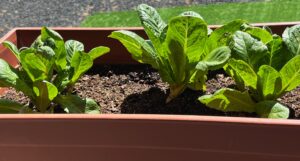 I recently completed the Master Gardener certification because I want to grow more of my own food. My first organic romaine crop is already growing in the garden, and I’m learning something new every day. There’s something incredibly satisfying about walking outside and harvesting lettuce just minutes before dinner.
Until my garden is producing enough to keep up with my salad habit, I’ll continue buying conventional romaine when organic isn’t available—and I’ll enjoy every bite without worry.
References
Environmental Working Group. (2026). EWG’s 2026 shopper’s guide to pesticides in produce: The full list. https://www.ewg.org/foodnews/full-list.php
Shi, M., Gu, J., Wu, H., Rauf, A., Emran, T. B., Khan, Z., Mitra, S., Aljohani, A. S. M., Alhumaydhi, F. A., Al-Awthan, Y. S., Bahattab, O., Thiruvengadam, M., & Suleria, H. A. R. (2022). Phytochemicals, nutrition, metabolism, bioavailability, and health benefits in lettuce-A comprehensive review. Antioxidants, 11(6), 1158. https://doi.org/10.3390/antiox11061158
Shokraei, S., Khandouzi, N., Sina, Z., & Nasrollahzadeh, J. (2021). The acute effect of incorporating lettuce or watercress into a moderately high-fat meal on postprandial lipid, glycemic response, and plasma inflammatory cytokines in healthy young men: A randomized crossover trial. Lipids in Health and Disease, 20(1), 66. https://doi.org/10.1186/s12944-021-01487-9
